

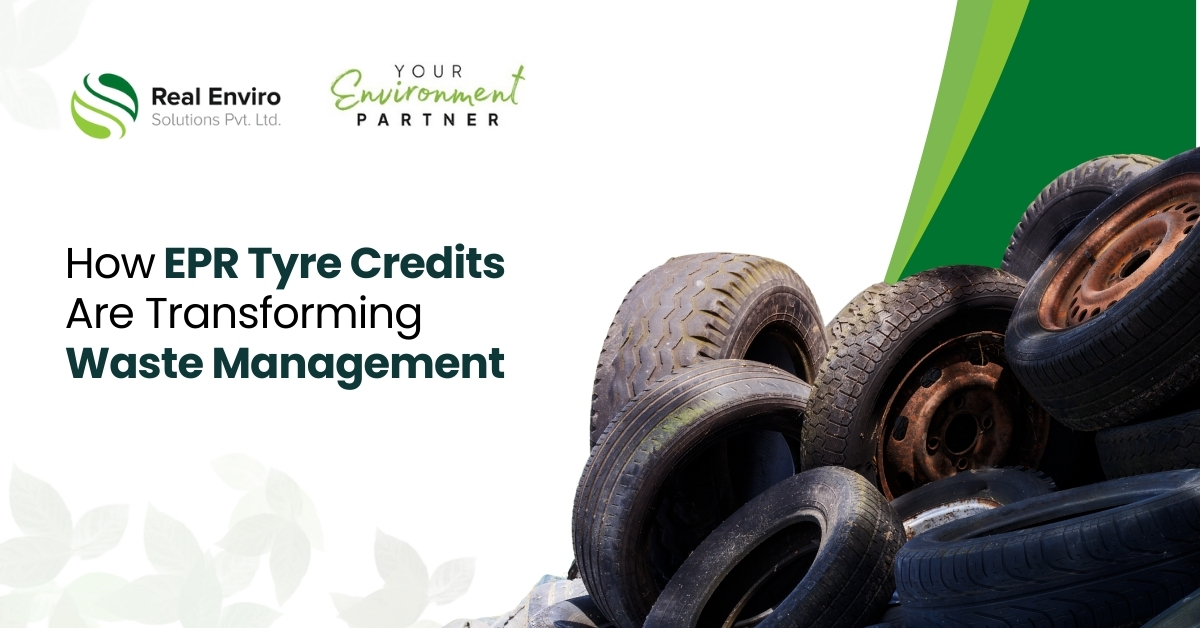
Extended Producer Responsibility (EPR) has emerged as a pivotal framework in addressing industrial waste management challenges in India. Specifically, EPR tyre credits are becoming a crucial tool for promoting sustainable tyre disposal and recycling practices. EPR mandates that producers of tyres take accountability for the entire lifecycle of their products, including post-consumer waste. By shifting responsibility from municipalities to producers, EPR ensures a more structured, efficient, and environmentally responsible approach to tyre waste management.
India faces an escalating challenge in tyre disposal. With the automotive sector growing rapidly, millions of end-of-life tyres are generated annually, many of which end up in landfills or are burned illegally, releasing hazardous pollutants. The environmental and health risks associated with improper tyre disposal, including soil and water contamination, air pollution, and breeding grounds for disease-carrying mosquitoes, make it imperative for an effective waste management strategy.
The Tyre Waste Problem in India
India produces millions of tyres each year, and the volume of end-of-life tyres is growing at an alarming rate. Estimates suggest that the country generates over 200,000 tons of discarded tyres annually, with numbers rising alongside the expansion of the automotive industry. Despite their potential for recycling, many of these tyres are improperly disposed of due to inadequate infrastructure and awareness.
Improper disposal of tyres presents severe environmental hazards. Tyres dumped in landfills take decades to decompose, leaching toxic chemicals into the soil and groundwater. Open burning of tyres releases harmful pollutants, including carbon monoxide, sulfur oxides, and particulate matter, contributing to air pollution and respiratory problems. Accumulated tyre piles also become breeding grounds for mosquitoes, escalating public health risks.
Municipal authorities face significant challenges in managing tyre waste. Limited budgets, insufficient collection systems, and the absence of specialized recycling facilities hinder effective management. Many cities rely on informal waste collectors, leading to inefficient collection and high rates of leakage into the environment. For example, in certain urban areas, discarded tyres block drainage channels, causing flooding and other infrastructural problems during monsoon seasons.
Understanding EPR Tyre Credits
EPR tyre credits are a system designed to encourage tyre producers to take responsibility for the lifecycle of their products. At its core, EPR ensures that manufacturers contribute to the collection, recycling, and safe disposal of tyres they introduce into the market. These credits act as measurable units representing the amount of tyre waste a producer has successfully managed through authorized recycling channels.
India’s regulatory framework supports EPR through multiple guidelines, including the Plastic Waste Management Rules, E-Waste Rules, and specific Tyre EPR guidelines issued by the Central Pollution Control Board (CPCB). These regulations mandate that tyre producers meet predefined recycling targets and collaborate with certified recyclers and collection centers. Compliance is monitored through reporting systems and periodic audits, making transparency a critical component of EPR implementation.
The calculation of EPR credits is based on the weight and type of tyres collected and recycled. Producers accumulate credits proportional to the volume of end-of-life tyres managed.
How EPR Tyre Credits Work
Extended Producer Responsibility (EPR) for tyres is a regulatory mechanism designed to make tyre producers responsible for the lifecycle management of their products, from production to end-of-life disposal.
Producers’ Obligations to Finance Collection and Recycling
Under the EPR framework, tyre producers are legally obligated to bear the financial and operational responsibility for the collection and recycling of end-of-life tyres. This means they either directly manage take-back programs or fund authorized recyclers and collection agencies. The cost incurred by producers in ensuring environmentally compliant recycling is accounted for in the issuance of EPR credits. Each credit represents a quantified amount of tyre waste that has been successfully diverted from landfills and processed through authorized recycling channels.
Tracking Tyre Waste from Collection to Recycling
Digital traceability is a critical component of the EPR system. Advanced tracking mechanisms, such as QR codes and RFID tags on tyre batches, allow every tyre to be monitored from collection to final recycling. These technologies enable producers and regulators to verify that tyres are being properly processed, ensuring transparency and accountability.
Types of Tyre Recycling Methods
Tyres collected under the EPR scheme are processed using a variety of recycling methods:
- Mechanical Recycling: Involves shredding tyres into chips or granules for use in civil engineering, playground surfaces, or as fuel in cement kilns.
- Chemical Recycling: Uses chemical processes to break down tyres into raw materials such as synthetic oils, carbon black, and steel, which can be reused in manufacturing new products.
- Pyrolysis: A thermal decomposition technique that converts tyres into oil, gas, and char at high temperatures in the absence of oxygen, providing a sustainable route for energy recovery and material reuse.
Revenue and Credit Generation for Producers
EPR credits serve both regulatory and financial functions. Producers who meet or exceed recycling targets can generate surplus credits, which may be tradable or used to offset future obligations. This creates a market-driven incentive for efficient recycling operations. Conversely, failing to meet targets may result in penalties, ensuring adherence to environmental standards.
Innovations Driving EPR Tyre Credit Effectiveness
Extended Producer Responsibility (EPR) for tyres has emerged as a critical mechanism in promoting sustainable waste management and advancing the circular economy. In India, where tyre consumption continues to grow rapidly, innovations in technology and process management are significantly enhancing the effectiveness of EPR tyre credits, ensuring that end-of-life tyres are efficiently collected, recycled, and reintegrated into the economy.
Digital Tracking and Producer-Recycler Marketplaces
One of the most impactful innovations in EPR implementation is the development of digital tracking systems. By leveraging QR codes, geotagging, and digital record-keeping, producers and recyclers can monitor tyre collection and recycling in real time. These platforms not only simplify compliance but also increase accountability across the supply chain.
Advanced Tyre Recycling Technologies
Technological advancements in tyre recycling are redefining the possibilities for sustainable material recovery. Chemical recycling, pyrolysis, and devulcanization are emerging as key methods to recover valuable resources from end-of-life tyres. Pyrolysis, for example, converts waste tyres into fuel oil, carbon black, and steel, while devulcanization restores rubber for reuse in new tyre manufacturing.
Blockchain for Traceability and Transparency
Blockchain technology is being increasingly integrated into tyre recycling initiatives to enhance transparency and traceability. By recording every stage of the tyre’s lifecycle on an immutable ledger, blockchain ensures that EPR tyre credits are verifiable and tamper-proof.
Collaboration with Urban Local Bodies and Private Players
Effective EPR implementation relies on collaboration between government entities and private recyclers. Urban Local Bodies (ULBs) play a crucial role in tyre collection and segregation, while private players bring technical expertise in recycling and material recovery. Partnerships between these stakeholders streamline logistics, improve collection rates, and ensure that EPR tyre credits are accurately accounted for, contributing to a robust circular economy for tyres.
Conclusion
In conclusion, EPR tyre credits are proving to be a transformative tool in advancing tyre recycling in India and fostering a sustainable circular economy for tyres. By incentivizing manufacturers and importers to take responsibility for end-of-life tyres, EPR mechanisms have significantly improved collection rates, reduced environmental hazards, and promoted the integration of recycled materials into new products. The benefits extend beyond environmental protection—these initiatives also generate economic opportunities, encourage technological innovation in recycling, and help India move closer to global sustainability targets.
However, the success of EPR schemes depends on active collaboration among producers, recyclers, and government authorities. Producers must commit to transparent reporting and responsible sourcing, recyclers need to adopt advanced recycling techniques, and policymakers should facilitate streamlined regulations and monitoring frameworks. This collaborative ecosystem ensures that tyre waste is managed efficiently, responsibly, and sustainably.