

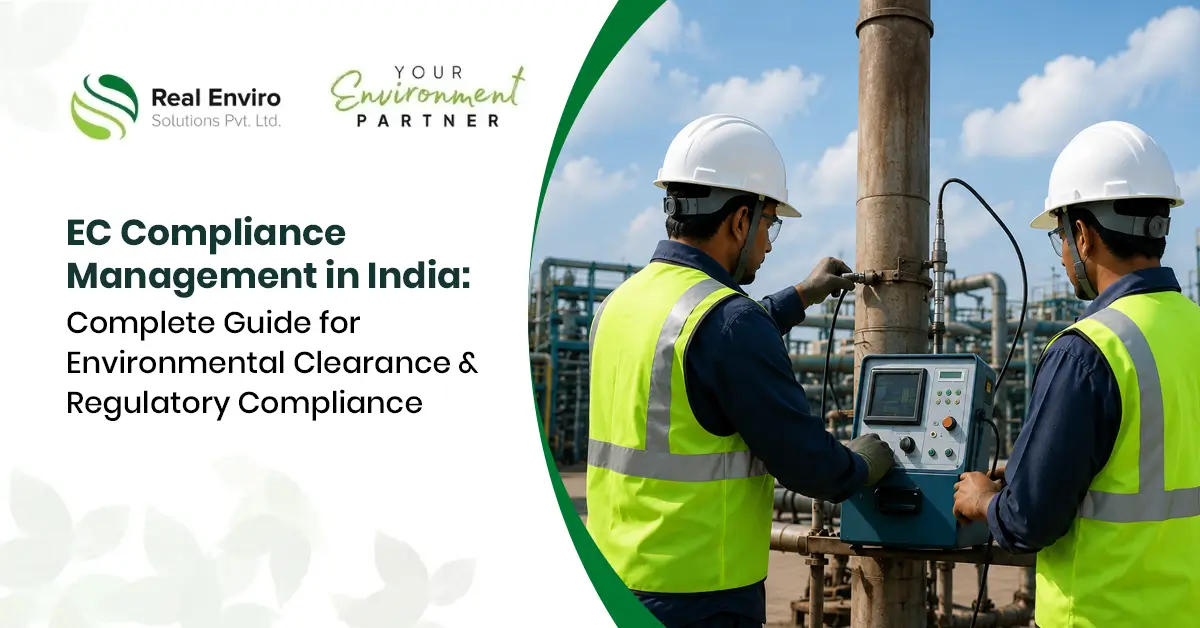
In today’s industrial and infrastructure-driven economy, obtaining Environmental Clearance (EC) is only the first step. The real challenge lies in maintaining ongoing EC Compliance Management to ensure that projects operate within the approved environmental conditions.
For industries, infrastructure projects, and construction developments, EC compliance is mandatory under Indian environmental laws. Failure to comply can lead to penalties, legal actions, or project shutdowns.
What is EC Compliance Management?
EC Compliance Management refers to the process of monitoring, implementing, and reporting all the conditions specified in the Environmental Clearance (EC) granted by regulatory authorities.
It ensures that a project follows all environmental norms, pollution control measures, and sustainability guidelines throughout its lifecycle.
Why EC Compliance is Important?
Maintaining EC compliance is crucial for every project that has received environmental clearance.
Key Benefits:
- Ensures adherence to Environmental Clearance conditions
- Avoids legal penalties & notices
- Supports smooth project operations
- Builds trust with regulatory authorities
- Promotes environmental sustainability
- Essential for project expansion & renewal approvals
Who Needs EC Compliance Management?
EC compliance is required for:
- Industrial Projects
- Infrastructure & Construction Projects
- Mining Projects
- Power Plants
- Chemical & Manufacturing Units
Key Components of EC Compliance Management
An effective EC compliance system includes:
1. Compliance Monitoring
Tracking EC conditions
Monitoring environmental parameters
Ensuring pollution control measures
2. Environmental Monitoring Reports
Air quality monitoring
Water quality testing
Noise level monitoring
Soil analysis
3. Half-Yearly Compliance Reports
Submission to regulatory authorities
Documentation of compliance status
Online reporting on government portals
4. Documentation & Record Keeping
Maintaining logs & registers
Environmental audit reports
Inspection records
5. Implementation of EMP (Environmental Management Plan)
Waste management system
Pollution control equipment
Resource conservation practices
Legal Requirements for EC Compliance in India
Projects must comply with:
- Environmental Protection Act
- EIA Notification
- Pollution Control Board guidelines
- Ministry of Environment, Forest and Climate Change (MoEFCC) norms
Failure to comply may result in:
Show-cause notices
Heavy fines
Project suspension or closure
Role of EC Compliance in Sustainable Development
Proper EC compliance helps in:
- Reducing environmental pollution
- Promoting waste management & recycling
- Conserving natural resources
- Supporting green and sustainable projects
- Enhancing corporate environmental responsibility
EC Compliance Management Process
Step-by-Step Process:
- Review of EC Conditions
- Gap Analysis & Risk Assessment
- Implementation of Compliance Measures
- Environmental Monitoring & Testing
- Preparation of Compliance Reports
- Submission & Follow-up with Authorities
Why Choose Professional EC Compliance Services?
Hiring expert consultants ensures:
- Accurate compliance tracking
- Timely report submission
- Expert handling of documentation
- Coordination with authorities
- Reduced legal risks
- Hassle-free compliance management
Conclusion
EC Compliance Management is a critical aspect of running any project that has received environmental clearance. It ensures that businesses operate responsibly while meeting all legal and environmental requirements.
By adopting a structured compliance system and expert support, organizations can avoid risks, improve efficiency, and contribute to a sustainable future.