

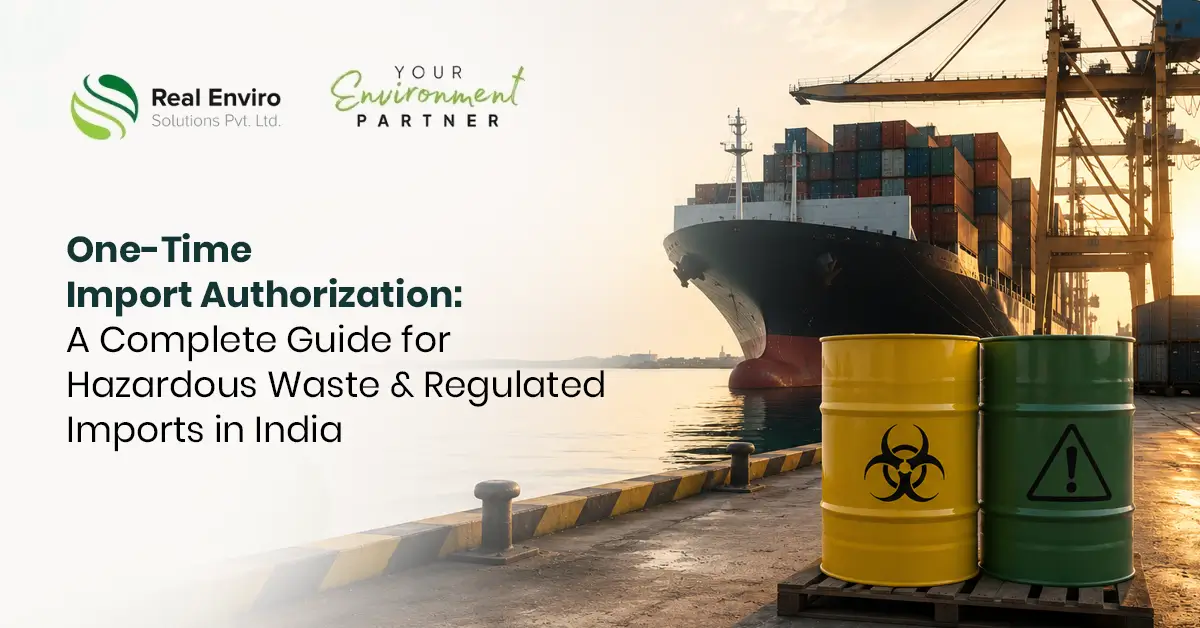
In today’s highly regulated environment, importing certain materials — especially hazardous waste, scrap, chemicals, and restricted items — requires strict compliance with environmental laws. One of the most critical regulatory requirements in this domain is the One-Time Import Authorization.
For industries engaged in import of hazardous waste, metal scrap, electronic waste, or other regulated materials, obtaining proper authorization from authorities such as the Central Pollution Control Board (CPCB) and Ministry of Environment, Forest and Climate Change (MoEFCC) is essential to ensure legal and compliant operations.
What is One-Time Import Authorization?
One-Time Import Authorization is a specific approval granted to importers allowing them to import restricted or regulated materials for a particular consignment or time period. This authorization is generally required under the Hazardous and Other Wastes (Management and Transboundary Movement) Rules.
Unlike general licenses, this approval is transaction-specific, ensuring that every import complies with:
- Environmental safety standards
- Waste management regulations
- International movement guidelines
Without this authorization, such imports are considered illegal and may attract heavy penalties, shipment rejection, or legal action.
Why One-Time Import Authorization is Important
The importance of this authorization goes beyond regulatory compliance. It plays a crucial role in ensuring environmental protection, traceability, and responsible import practices.
Key Benefits:
- Prevents unauthorized import of hazardous and restricted materials
- Ensures safe handling, recycling, or disposal of imported waste
- Helps avoid Environmental Compensation (EC) and penalties
- Enhances credibility with regulatory authorities
- Enables smooth customs clearance and documentation verification
Who Requires One-Time Import Authorization?
This authorization is mandatory for:
- Importers of hazardous waste and scrap materials
- Industries importing used oil, e-waste, plastic waste, or metal scrap
- Recycling units and processors
- Traders dealing in regulated or restricted materials
Any business involved in transboundary movement of waste or controlled materials must comply with this requirement.
Regulatory Framework & Authorities Involved
The process of obtaining One-Time Import Authorization involves multiple regulatory bodies, including:
- Central Pollution Control Board (CPCB)
- Ministry of Environment, Forest and Climate Change (MoEFCC)
- State Pollution Control Boards (SPCBs)
These authorities ensure that imports align with Hazardous Waste Rules, CPCB guidelines, and international environmental conventions.
Key Documents Required
To obtain authorization, companies must submit:
- Import Export Code (IEC)
- Detailed waste/material description
- Safety Data Sheet (SDS)
- Agreement with authorized recycler or processor
- Valid consent/authorization from SPCB
- Previous compliance records
Accurate documentation is critical, as any discrepancy may lead to application rejection or delays.
Step-by-Step Process
- Application Submission to CPCB/MoEFCC
- Document Verification by authorities
- Technical Evaluation of material and its environmental impact
- Approval / Rejection based on compliance status
- Import Execution as per authorized conditions
Each step requires precision, compliance knowledge, and proper coordination with regulatory authorities.
Common Challenges Faced by Importers
Industries often face:
- Delays due to incomplete documentation
- Misclassification of hazardous waste
- Lack of awareness about updated import regulations
- Difficulty in coordinating with recyclers and authorities
These challenges can lead to shipment delays, financial losses, and regulatory risks.
How to Ensure Smooth Approval
To avoid issues:
- Maintain accurate and updated compliance records
- Work with authorized recyclers/processors
- Stay updated with CPCB and MoEFCC guidelines
- Seek expert consultancy support for documentation and process handling
A proactive approach ensures faster approvals and zero compliance risk.
Conclusion
One-Time Import Authorization is a critical regulatory requirement for industries involved in importing hazardous or restricted materials. It ensures that imports are carried out in a safe, transparent, and environmentally responsible manner.
Companies that prioritize proper authorization, documentation, and compliance can avoid penalties, ensure smooth operations, and build long-term credibility in a highly regulated ecosystem.